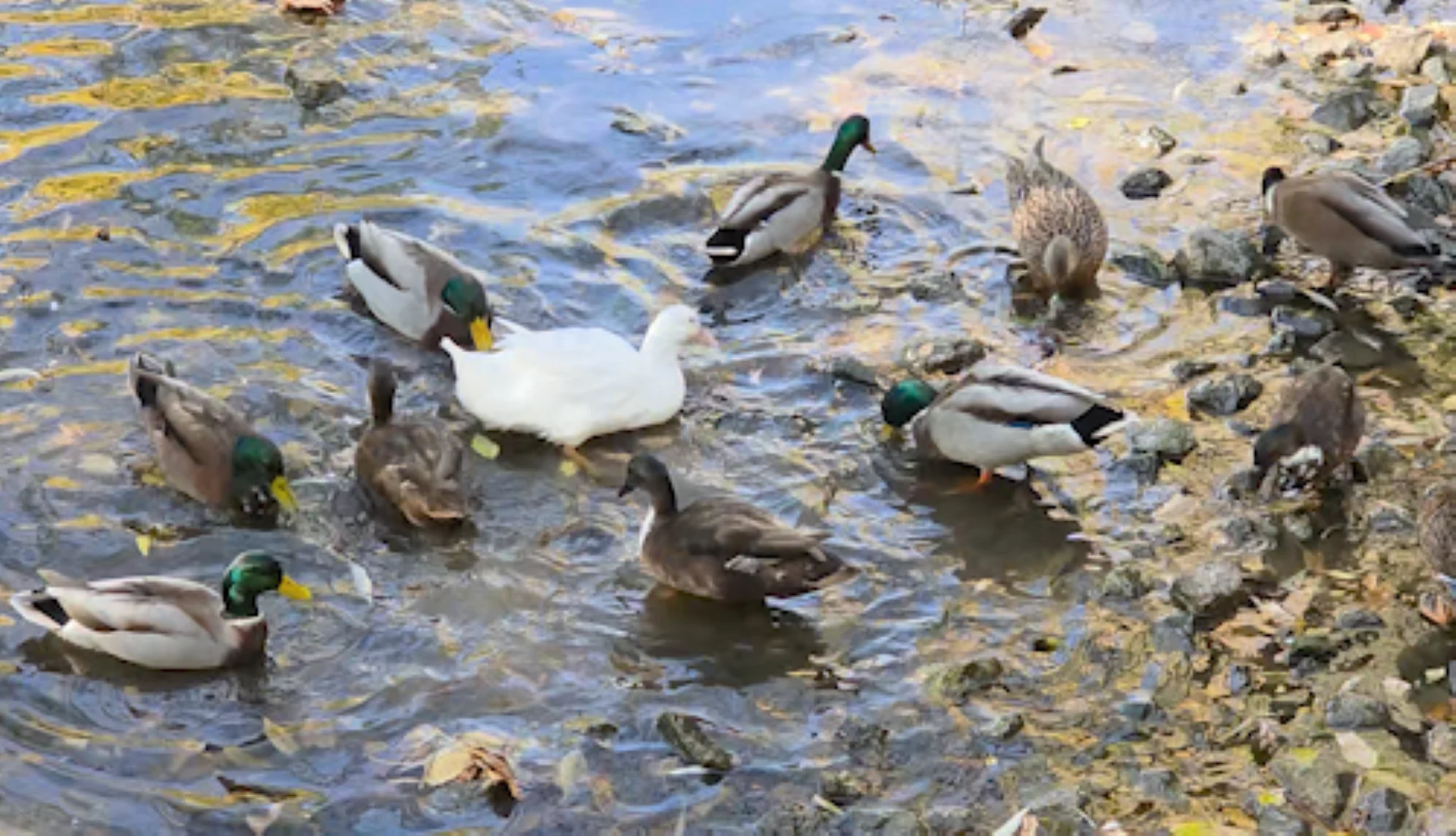
The odd duck out: Domestic duck found living among the wild

A domestic duck has inexplicably joined a flock of wild mallards in an Ontario creek. Wildlife experts express concern for its survival as winter approaches, highlighting the challenges domestic animals face when released into the wild.
Same, same, but different?
A domestic farm duck has been spotted living among the wild mallards in a creek in Mississauga, Ont.
Sandy Donald, a spokersperson with the Ontario Wildlife Rescue, confirmed the peculiar sight.
“It's one of the, really, first times I've ever seen a domestic duck with wild ducks,” said Donald. “Normally, they have nothing to do with each other. They appear to be getting along just fine. The other ducks are not staying away, or anything like that.”
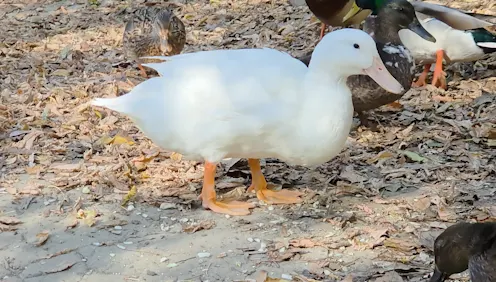
(Marta Czurylowicz/The Weather Network)
According to residents, this white duck has been here for quite some time. Passersby often stop by to feed the group or to simply admire them. They say the duck has been here for weeks.
It may not be a wild duck, but the white duck has picked up some wild characteristics.
“He's basically sticking his head under the water, and you know, pulling up plankton or whatever you can find, which, [when you] look at the other ducks, they're doing the exact same thing. [It] is fascinating, like how he wouldn't have been trained for that that's for sure. So, he's picked it up from the other ones,” said Donald. “It's an incredibly adaptable animal”
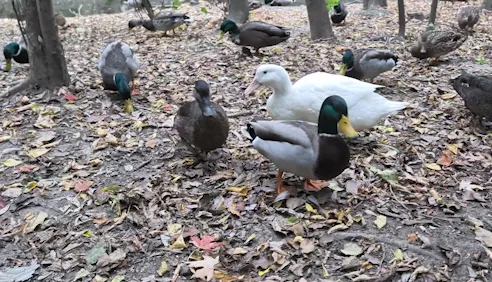
(Marta Czurylowicz/The Weather Network)
Donald says he has no idea how the duck got here.
“The only thing I can think of is [that] somebody had it as a pet and it got away.”
Alternatively, someone let it go in the wild, as we’ve seen with other domestic animals in the past.
Releasing domesticated animals into the wild can disrupt ecosystems, contribute to overpopulation and spread diseases. It also puts the pet into a vulnerable situation and is irresponsible pet ownership.
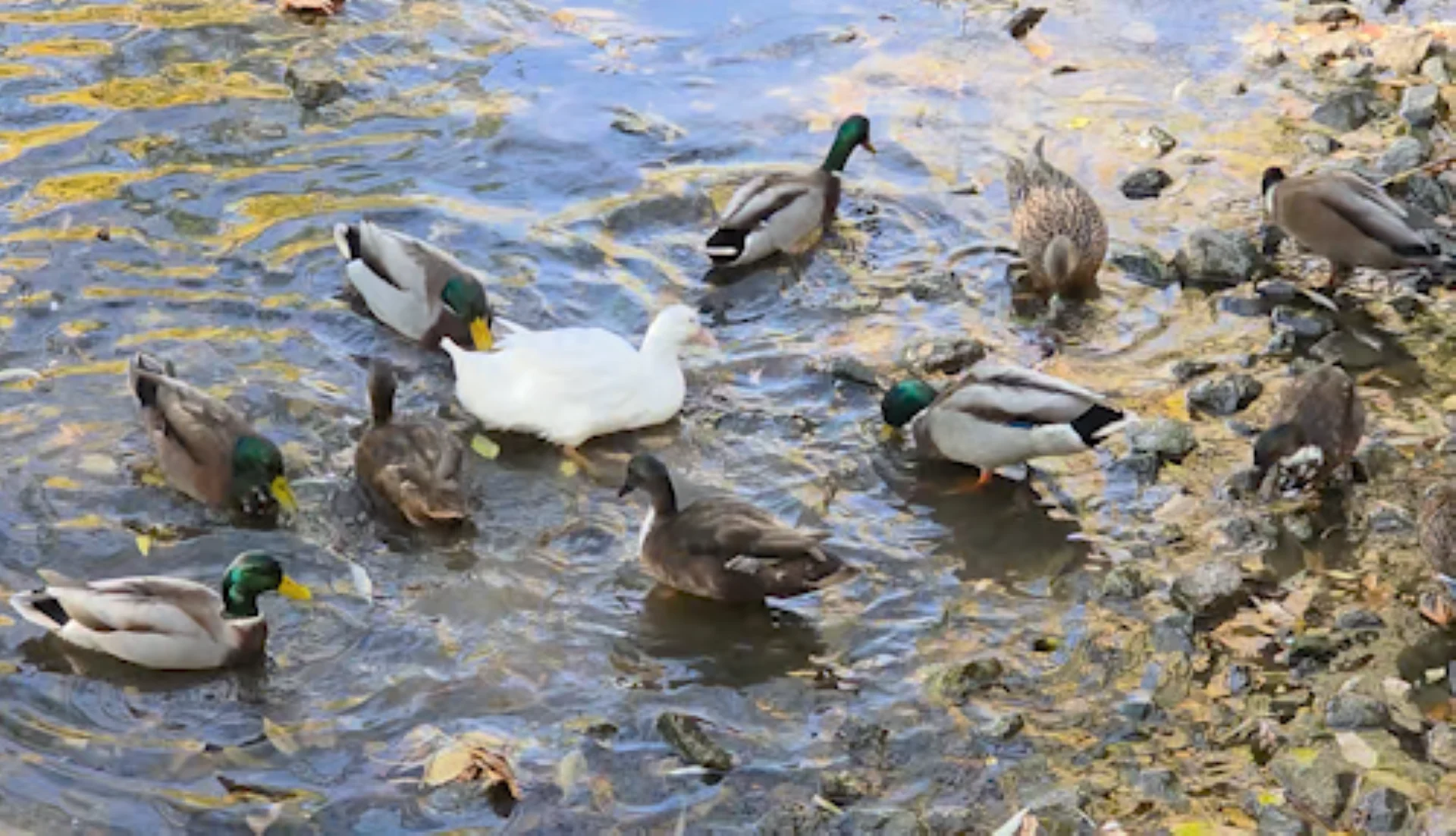
(Marta Czurylowicz/The Weather Network)
Donald says this farm duck likely can't fly far distances, if at all, and it can easily fall prey to predators such as coyotes and foxes. It simply doesn’t have the animal instincts that mallards do.
“Their chances of survival are extremely low. They're not geared for it,” he said. “It does get cold in Ontario.”
“The mallard ducks will probably migrate when it gets cold. Unfortunately, the domestic one...it will probably, unfortunately, not survive,” Donald added.
So, what should you do if you spot something in the wild that doesn’t belong? Contact your local animal services, or shelters and sanctuaries near you.
The Ontario Wildlife Rescue has several contacts on its website.